25+ Bedtime Story Ideas for Toddlers (That They'll Ask For Again) | LuluStories
Out of bedtime story ideas? Here are 25+ story themes organised by category.
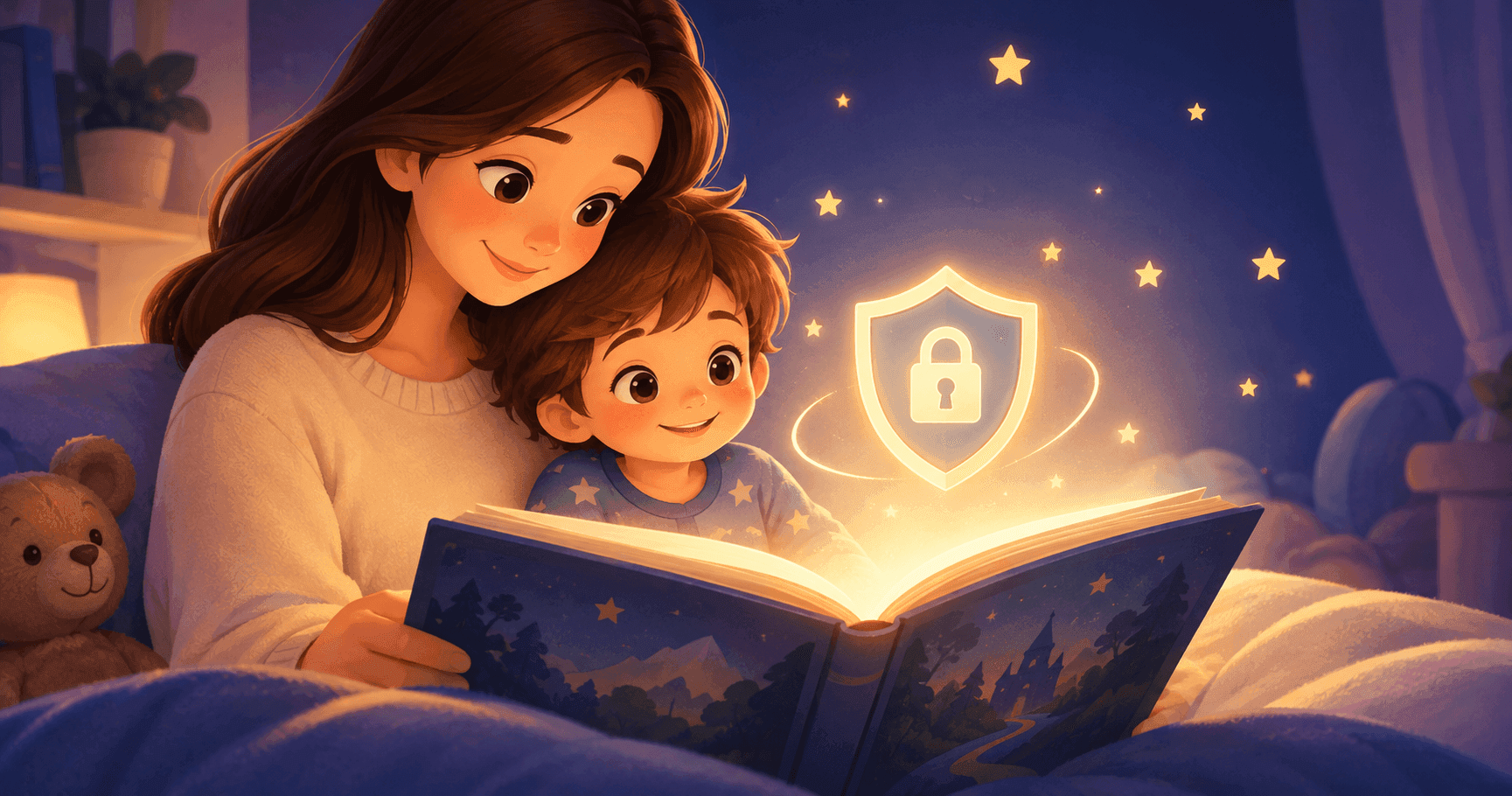
It's 7:45pm. Your toddler is in bed, eyes already heavy, and they've just asked the question every parent eventually runs out of answers for: "What story tonight?"
Coming up with a fresh bedtime story idea every single night is harder than it sounds — especially for toddlers, who need stories that are simple enough to follow half-asleep, short enough to fit in a ten-minute window, and comforting enough to actually help them wind down rather than wind up.
This is a working list of bedtime story ideas specifically suited to toddlers (roughly ages 1–4), organised by theme, plus guidance on what makes a toddler bedtime story actually work — and a faster way to get a brand new one whenever you need it.
What makes a good toddler bedtime story (and what doesn't)
Before the list, it's worth knowing what separates a story that settles a toddler from one that overstimulates them.
Good toddler bedtime stories have:
- A slow, gentle pace — nothing rushed or full of sudden surprises
- A small, calm cast of characters (one or two is often enough)
- A predictable structure — toddlers find repetition soothing, not boring
- A clear, cosy ending — everyone safe, everyone sleepy, everyone home
- Soft sensory language — warm, soft, quiet, gentle, cosy
What to avoid right before sleep:
- Anything genuinely scary or suspenseful — toddlers can't yet separate fiction from reality reliably
- Loud, chaotic, or fast-moving plots
- Cliffhangers or unresolved tension — toddlers need closure before lights out
- Long, complex stories that ask too much of an already-tired brain
With that in mind, here are 25+ bedtime story ideas organised by theme, ready to tell tonight.
Animal adventure stories
Animals are the single most reliable bedtime story theme for toddlers — familiar, comforting, and endlessly flexible.
- The sleepy bear who couldn't find his cave — A bear wanders a forest at dusk looking for the perfect spot to hibernate, meeting gentle forest friends along the way who each offer a cosy suggestion.
- The little duckling's first swim — A baby duck follows their mother across a calm pond for the first time, nervous at first, brave by the end.
- The rabbit who counted stars — A rabbit who can't sleep counts stars from their burrow entrance until their eyes grow heavy.
- The kitten who found her way home — A short, gentle story about a kitten exploring just a little too far before finding their way back to a warm basket.
- The elephant's quiet walk — A baby elephant takes a slow walk with their herd at sunset, learning to listen to the sounds of the evening.
Magical and gentle fantasy stories
For toddlers who love a touch of wonder without anything frightening.
- The cloud that carried dreams — A soft cloud drifts over a sleeping town, gently delivering a different dream to each child below.
- The tiny dragon who was scared of the dark — A small, friendly dragon learns that their own fire-breath can make a cosy nightlight.
- The fairy who tucked in the flowers — A garden fairy goes from flower to flower each night, gently closing their petals to sleep.
- The moon's bedtime job — The moon tells the story of their nightly task: watching over every sleeping child until morning.
- The friendly forest gnome's lantern — A gnome carries a tiny lantern through the woods each night, lighting the path for sleepy woodland creatures heading home.
Everyday, relatable stories
Sometimes the most soothing stories are about ordinary moments — toddlers love recognising their own world in a story.
- A trip to the park — A simple retelling of a fun day: the swings, the slide, feeding the ducks, and the walk home feeling pleasantly tired.
- Helping mum or dad bake — A cosy story about mixing, stirring, and the warm smell of something baking, ending with everyone sharing a treat together.
- The toy box at night — What the toys quietly get up to after lights-out — a gentle, reassuring peek into a familiar, safe world.
- Grandma and Grandpa's garden — A slow afternoon spent picking vegetables, watching butterflies, and resting in the shade.
- The rainy day adventure — Puddle jumping, raincoats, and the cosy feeling of coming home to dry socks and a warm blanket.
Seasonal and nature stories
Great for connecting bedtime to whatever is happening outside the window.
- The first snowflake of winter — A single snowflake's gentle journey from cloud to ground, landing softly on a sleeping town.
- The sunflower that followed the sun — A simple, calming story about a sunflower's day, ending as it closes for the night.
- The acorn's long winter nap — A tiny acorn settles into the soil for a long winter sleep, dreaming of the tree it will grow into.
- The firefly's evening light — A firefly lights up the summer evening, guiding other sleepy bugs home to bed.
- The river that flowed to sleep — A gentle river slows and quiets as night falls, just like a toddler winding down for bed.
Friendship and feelings stories
Useful for toddlers working through their own small emotions.
- The two best friends who shared one umbrella — A simple story about kindness and sharing on a rainy day.
- The bear who felt a little sad — A short, validating story about a character feeling an emotion, being comforted by a friend, and feeling better.
- The penguin who was scared of the water — A gentle story about trying something new with the support of family, ending in proud achievement.
- Saying goodnight to everyone — A character goes around saying goodnight to each member of their family, one by one — wonderful for toddlers who like a long, ritualistic goodnight routine.
- The lost toy that was found — A short, reassuring story about a toy temporarily lost and joyfully reunited — comforting for toddlers anxious about separation.
How to tell any of these stories well
You don't need to memorise a script. Toddlers respond more to delivery than plot complexity. A few things that make any of the above ideas land well:
Slow your voice down. Slower than feels natural. The pace of your voice is doing as much sleep-inducing work as the content of the story.
Use the same opening and closing every night. "Once upon a cosy night..." and "...and everyone slept soundly until morning. The end." Repetition of structure is deeply comforting for toddlers, even when the story itself changes.
Let them fill in details. "What colour do you think the bear's cave was?" Toddlers who participate in shaping the story stay calmly engaged rather than passively waiting for the next plot point.
Repeat their favourites without guilt. If your toddler asks for "the duck story" for the eleventh night in a row, that's not boredom on their part — it's their brain processing and finding comfort in the predictable. Repetition is a feature, not a problem.
When you've genuinely run out of ideas
Even with 25 ideas in your back pocket, there will be nights — and there will be many of them — when none of the above quite fits, or your toddler has heard them all twice already this week and wants something new.
This is where a personalised storybook becomes genuinely useful rather than just a nice extra. With LuluStories, you can generate a brand new, fully illustrated bedtime story in a couple of minutes — built around your toddler's actual name, their favourite animal, their current obsession (dinosaurs this week, diggers the next), and a gentle, age-appropriate tone designed specifically for toddlers winding down for sleep.
Unlike making up a story on the spot, you get one that's fully illustrated — meaning your toddler isn't just hearing a new story, they're seeing themselves in it, which tends to hold their attention even on the nights when they're fighting sleep the hardest.
And because the story is generated around your child specifically, there's effectively no limit to how many fresh bedtime ideas you can have. New theme, new adventure, same comforting toddler-appropriate tone every time.
Create a free personalized bedtime story for your toddler →
A simple bedtime story formula you can reuse forever
If you want to make up your own stories on the spot rather than relying on a list, here's a formula that works reliably for toddlers:
1. A small, gentle character (an animal or a child) 2. wants something simple (to find their way home, to fall asleep, to find a friend) 3. takes a few small, calm steps (walking, looking, listening — nothing dramatic) 4. with the help of someone kind (a parent figure, a friend, a gentle guide) 5. and ends up safe, warm, and ready to sleep.
That five-beat shape can be stretched over any character, any setting, any season. Once you have it memorised, you genuinely never run out of bedtime stories again — even on the most exhausted nights.
Frequently asked questions
How long should a bedtime story be for a toddler? Around 3–7 minutes is usually the sweet spot for toddlers aged 1–4. Long enough to feel like a proper story, short enough not to overstimulate or extend the bedtime routine past the point of usefulness.
Is it bad to tell the same bedtime story every night? No — repetition is genuinely beneficial for toddlers. It builds predictability, supports language development through familiar patterns, and is often more soothing than novelty. Mix in new stories when you want to, but don't feel pressure to vary every night.
What age should toddlers stop having bedtime stories? There's no age toddlers "should" stop — most child development experts encourage continuing bedtime stories well into primary school years, simply adjusting length and complexity as the child grows.
My toddler gets too excited during stories instead of sleepy — what am I doing wrong? Likely nothing — it may simply be the story choice. Avoid anything with chase scenes, surprises, or fast pacing right before bed, and try slowing your reading pace down significantly. Calm, repetitive, low-stakes stories work best for the wind-down window.
Related posts: · How to Make Storytime a Family Ritual Your Children Will Remember Forever · Why Children Love Stories About Themselves · How to Get Kids Excited About Reading
Ready to create your child's own storybook?
Turn your child into the hero of a fully illustrated, personalized story in minutes.