The Best Screen-Free Creative Activities for Kids: From Coloring to Storytelling
Discover fun screen-free activities for kids that encourage creativity, imagination, reading, and learning through coloring, storytelling, crafts, and play.
The Best Screen-Free Creative Activities for Kids: From Coloring to Storytelling
Finding fun activities for children without relying on screens can sometimes feel challenging. While technology has its place in children's lives, creative offline activities give kids valuable opportunities to use their imagination, develop new skills, and spend meaningful time with family.
From coloring and drawing to storytelling and imaginative play, there are countless ways to keep children engaged without a tablet or television.
Here are 10 creative screen-free activities that children of different ages can enjoy.
1. Create Your Own Story
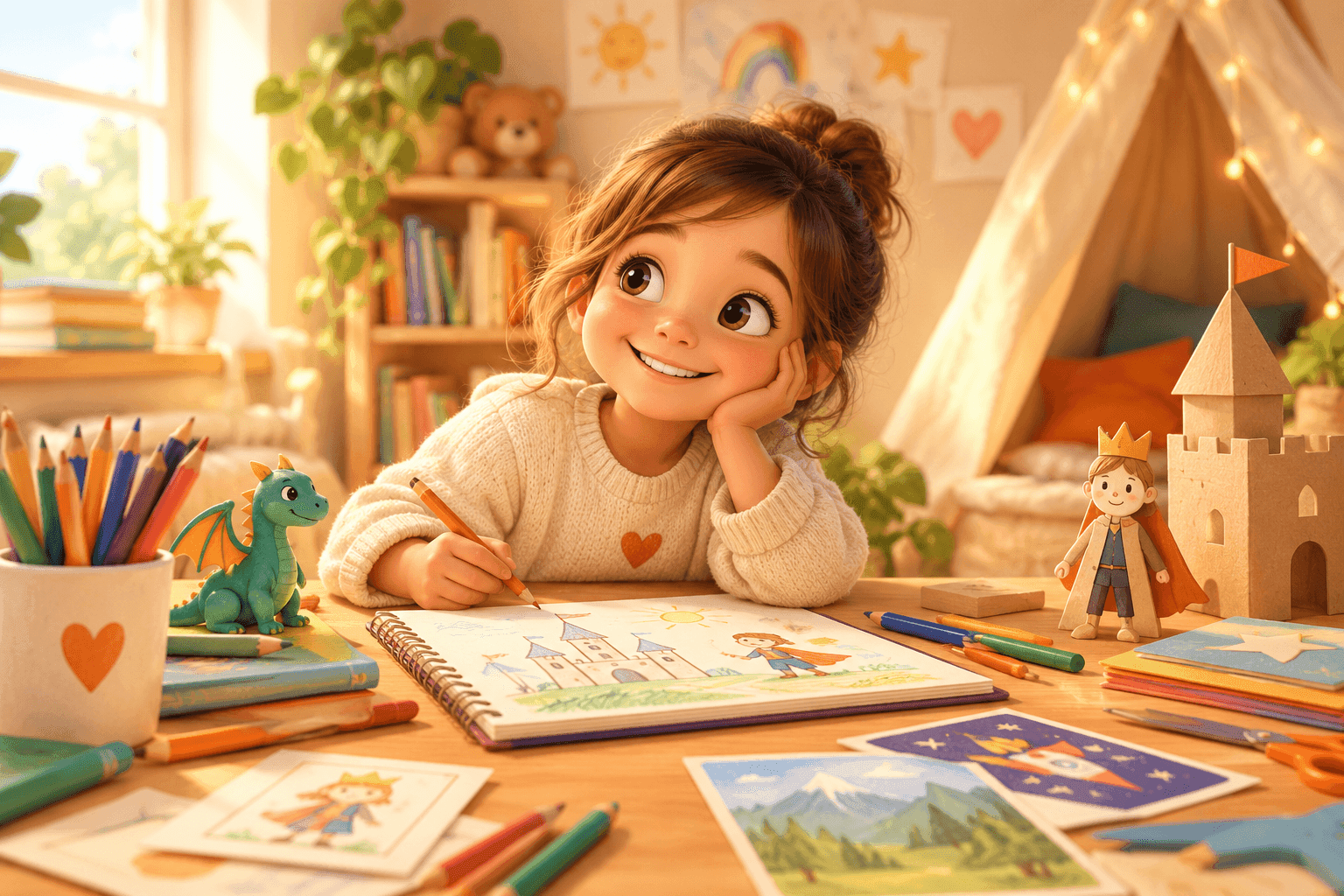
Storytelling is one of the simplest and most powerful creative activities for children. Encourage your child to invent a character, choose a setting, and imagine an exciting adventure.
You can begin with simple questions:
- Who is the main character?
- Where does the adventure take place?
- What problem needs to be solved?
- Who can help along the way?
Children can tell their stories out loud, write them down, or draw pictures to bring their ideas to life.
Creating stories helps children develop language skills, imagination, and confidence while making reading and storytelling feel like play.
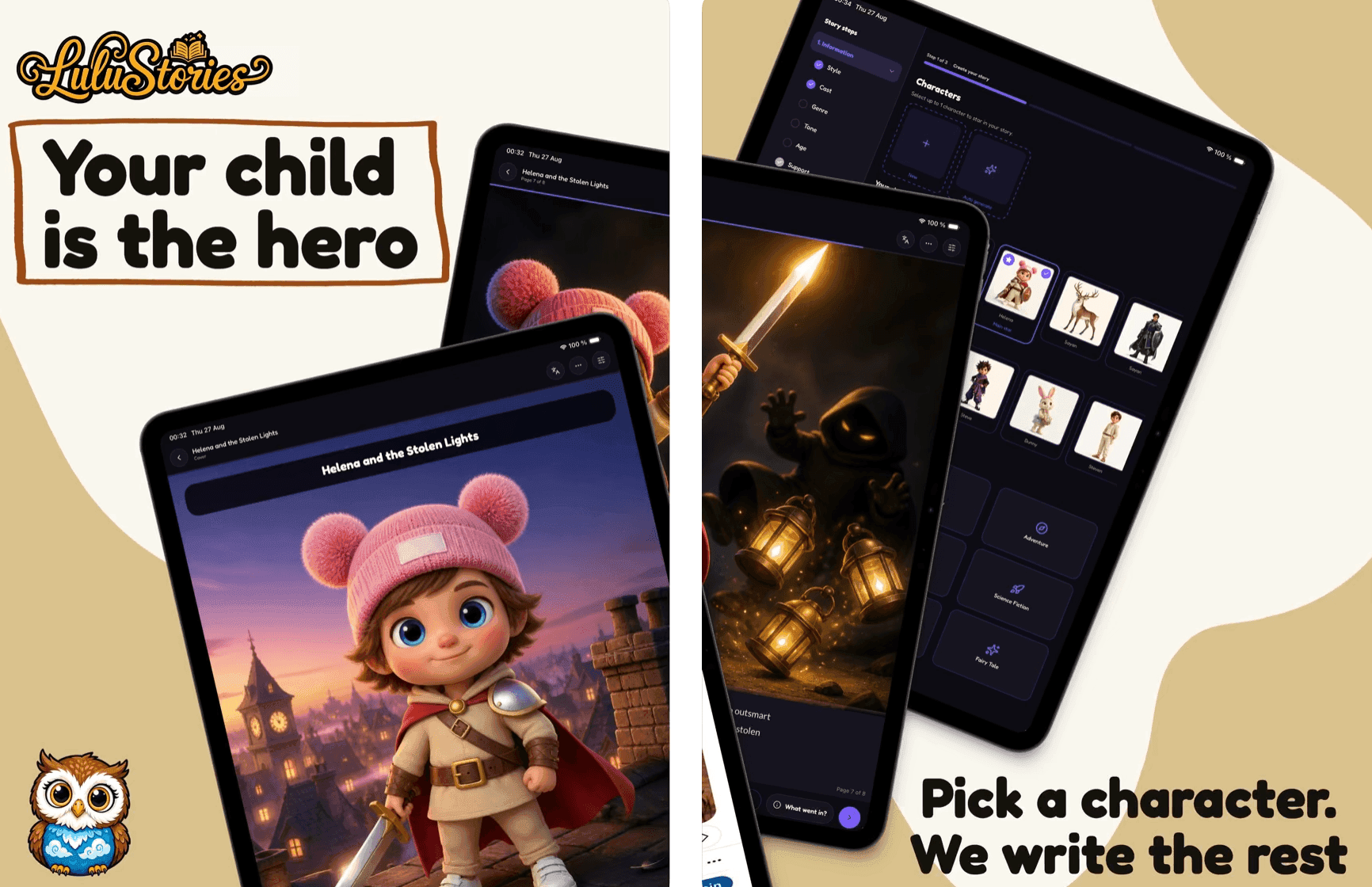
For an extra special experience, families can create personalized storybooks where children become the heroes of their own adventures.
2. Explore the World of Coloring
Coloring is a timeless activity that encourages creativity while helping children practice focus and fine motor skills. Whether your child enjoys animals, dinosaurs, fairy tales, outer space, or nature, coloring gives them the freedom to explore their imagination.
Printable coloring pages are especially useful for parents and teachers because they are easy to prepare and can be enjoyed almost anywhere.
For families looking for a wide variety of creative coloring activities, ColorWee can provide inspiration for children of different ages and interests.
You can also make coloring even more interactive by asking your child to invent a story about the picture they are creating.
For example:
- Where does this dragon live?
- What is the astronaut searching for?
- Why is the little fox wearing a hat?
A simple coloring page can quickly become the beginning of an imaginative adventure.
3. Design Your Own Characters
Children love creating characters with unique personalities and appearances. Give them paper, pencils, crayons, or markers and ask them to design someone new.
Their character could be:
- A brave explorer
- A talking animal
- A magical creature
- A superhero
- A friendly robot
- A child discovering a new world
Encourage them to think beyond appearance. What does the character enjoy? What are they afraid of? What makes them special?
Once the character is created, they can become part of a story, comic, or homemade picture book.
4. Make a Family Storybook
Creating a storybook together as a family is a wonderful way to combine creativity, reading, and quality time.
Start by choosing a simple idea. Perhaps the family is going on an adventure, discovering a hidden treasure, or helping a lost animal find its way home.
Each family member can contribute something:
- One person creates the characters.
- Another chooses the setting.
- Someone else invents the problem.
- Everyone helps decide how the story ends.
Children can illustrate each page using drawings, paintings, or collages.
The finished book becomes more than just an activity. It becomes a family memory that can be enjoyed again and again.
5. Build a Story Box
A story box is an easy activity that encourages spontaneous storytelling.
Find a small box and fill it with cards containing different ideas.
Characters
- A curious rabbit
- A young astronaut
- A friendly dragon
- A clever inventor
Places
- A magical forest
- A castle in the clouds
- The bottom of the ocean
- A mysterious island
Challenges
- Find a missing treasure
- Help a new friend
- Solve a mysterious puzzle
- Rescue someone in need
Let your child choose one card from each category and create a story using the three ideas.
This activity can be adapted for different ages and reading levels.
6. Create a DIY Puppet Theater
Children can transform almost anything into a puppet theater.
Use cardboard boxes, paper bags, socks, or simple drawings to create characters and props.
Together, put on a small performance for the family.
Puppet theater encourages children to:
- Practice communication
- Develop storytelling skills
- Express emotions
- Work collaboratively
- Build confidence
There is no need for a complicated setup. Sometimes the simplest homemade puppet can inspire the biggest adventure.
7. Go on a Nature Treasure Hunt
Outdoor exploration is another excellent way to encourage creativity without screens.
Create a simple treasure hunt with items children can safely observe or collect, such as:
- A yellow leaf
- A smooth stone
- A feather
- A flower
- Something shaped like a heart
You can turn the activity into a story by imagining that each discovery belongs to a magical world.
Perhaps the stones are dragon eggs, the leaves are fairy umbrellas, and the feathers belong to a bird that delivers secret messages.
Combining nature and imagination makes an ordinary walk feel like an adventure.
8. Draw and Write a Comic Book
Comic books are a fantastic way for children to combine visual creativity with storytelling.
Start with a simple character and divide a piece of paper into several panels.
Ask your child to draw:
- The beginning of the story.
- A problem or surprise.
- The adventure.
- The happy ending.
They can add speech bubbles and sound effects if they want.
Comic creation helps children understand story structure while giving them a fun way to practice writing and drawing.
It is also a great activity for children who may not yet enjoy traditional writing exercises.
9. Make Reading Time More Interactive
Reading does not always have to mean quietly sitting and listening to a book.
Parents can make reading more engaging by asking children questions throughout the story.
For example:
- What do you think will happen next?
- Which character would you like to be?
- How would you solve this problem?
- What would you change about the ending?
You can also encourage children to act out scenes, draw their favorite characters, or create alternative endings.
Interactive reading helps children connect emotionally with stories and can make reading feel more personal and enjoyable.
10. Create a Personalized Bedtime Adventure
Bedtime stories become even more magical when children can see themselves inside the adventure.
Instead of reading about a character they do not know, imagine a story where your child becomes the main hero.
Maybe they are:
- Exploring a magical forest
- Traveling to the moon
- Helping a lost puppy
- Discovering a hidden castle
- Meeting friendly animals
Personalized storytelling can help children become more engaged with reading because the story feels connected to their own imagination and experiences.
It also creates a wonderful opportunity for parents and children to spend quality time together before bed.
Why Creative Screen-Free Activities Matter
Screen-free activities are more than just a way to keep children occupied.
They encourage important developmental skills, including:
- Creativity and imagination
- Language development
- Problem-solving
- Fine motor coordination
- Emotional expression
- Communication and confidence
The best activities are often those that allow children to make something of their own.
A drawing becomes a character. A character becomes a story. A story becomes a book.
This process encourages children to see themselves not just as readers, but as creators.
Final Thoughts
There are countless ways to encourage creativity without relying on screens. Coloring, storytelling, drawing, crafts, reading, and imaginative play can all become meaningful experiences when children are given the freedom to explore their ideas.
The most important thing is not creating something perfect. It is giving children space to imagine, experiment, and express themselves.
Whether your child is coloring a magical creature, inventing a new character, or creating their own personalized storybook, every creative activity can become an opportunity for learning and connection.
And sometimes, the simplest idea can lead to the most unforgettable adventure.
Ready to create your child's own storybook?
Turn your child into the hero of a fully illustrated, personalized story in minutes.