How to Use AI to Create Bedtime Stories for Toddlers
Learn how to create AI bedtime stories for toddlers using their favorite characters. Simple tips & examples.
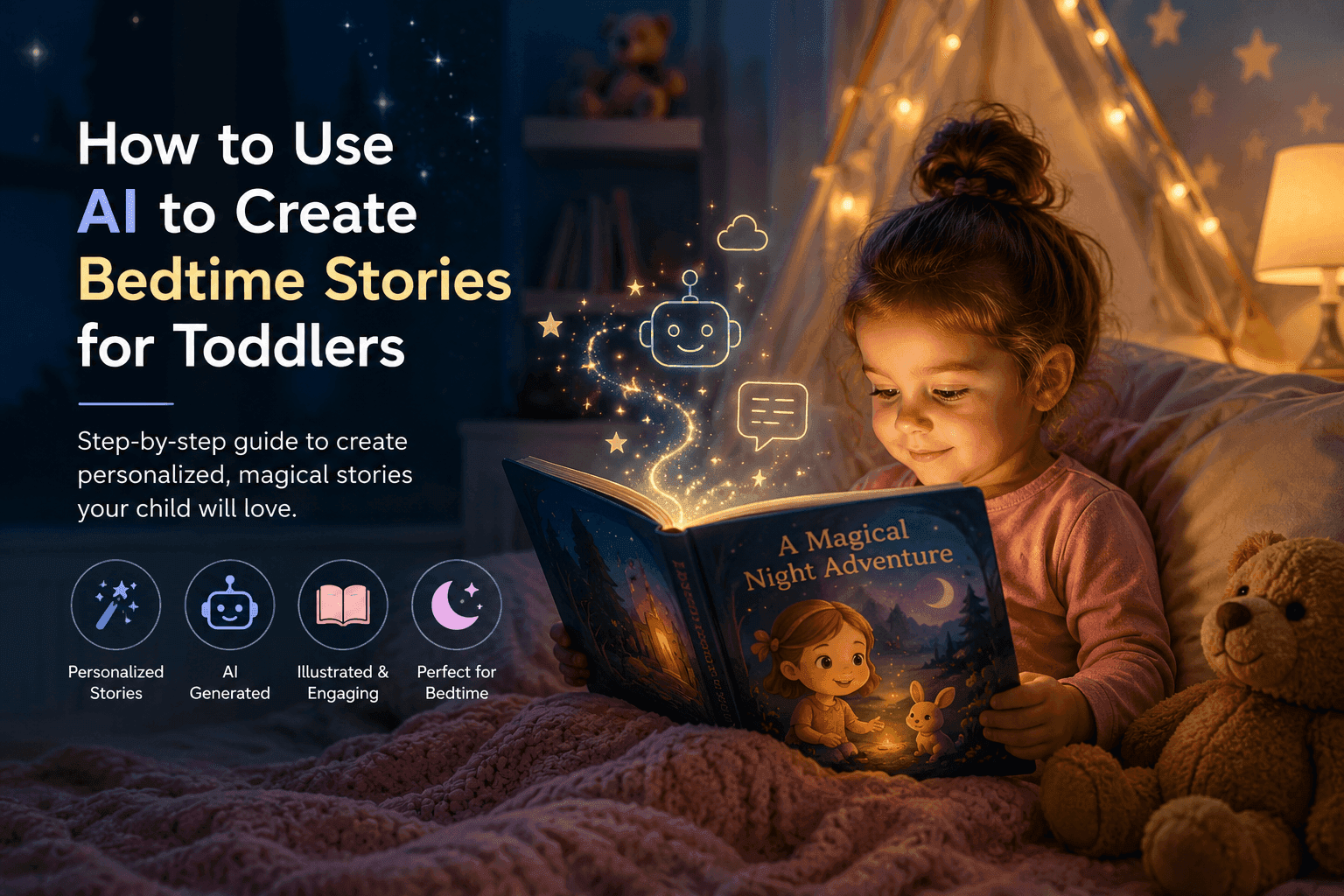
How to Use AI to Create Bedtime Stories for Toddlers
Bedtime stories are a simple way to help toddlers relax, build their imagination, and enjoy a calm routine before going to sleep. But coming up with a new story every night can be difficult.
AI can make this much easier.
With an AI story generator, you can create original bedtime stories based on your child's age, interests, favorite characters, and even their name. Instead of reading the same stories repeatedly, you can create a new story whenever your child wants something different.
In this guide, we'll show you how to use AI to create personalized bedtime stories for toddlers and how to make sure the stories are appropriate, calming, and enjoyable.
What Is an AI Bedtime Story Generator?
An AI bedtime story generator is a tool that uses artificial intelligence to create an original story from information you provide.
For example, you could ask an AI story generator to create a gentle bedtime story about:
- A two-year-old child named Emma
- A friendly bunny
- A magical forest
- A moonlit adventure
- A cozy ending before bedtime
The AI can then turn those ideas into a complete story.
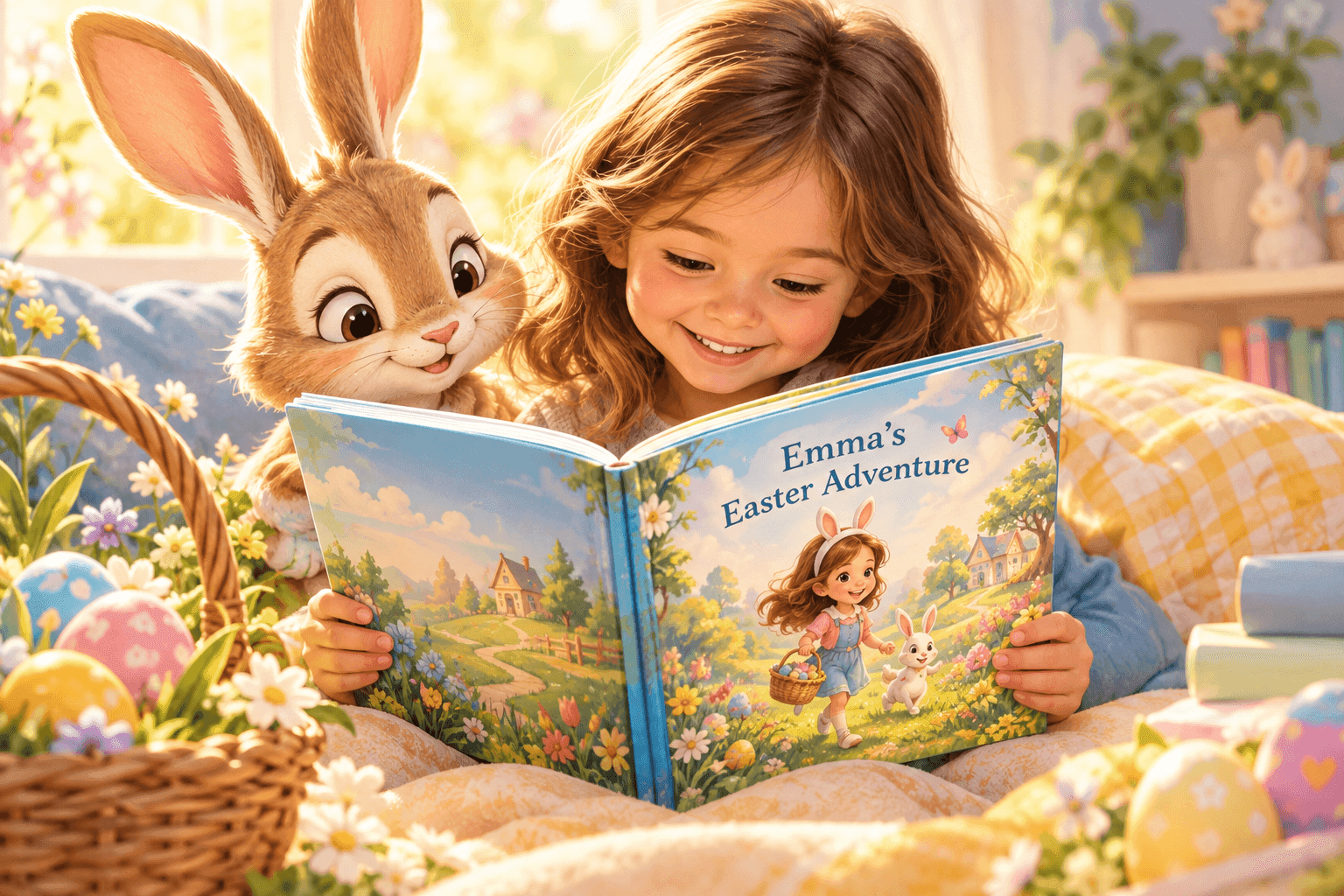
Some AI story generators can also create illustrations, allowing you to turn the story into a personalized storybook.
Why Use AI to Create Bedtime Stories?
AI can be particularly useful for parents who want to make bedtime stories more personal without spending a lot of time writing them themselves.
1. Create a new story in minutes
Instead of spending 20 or 30 minutes thinking of a story idea, you can give an AI tool a few details and generate a story almost instantly.
2. Personalize the story
A personalized story can include your child's:
- Name
- Age
- Favorite animals
- Favorite colors
- Hobbies
- Favorite places
- Interests
- Family members
For example, instead of reading about an unknown character, your toddler could hear a story about themselves exploring a magical garden with their favorite animal.
3. Match the story to your child's interests
Toddlers often have strong interests. One child might love dinosaurs while another loves trains, princesses, animals, or space.
AI makes it easy to create stories around those interests.
4. Create stories for different moods
You can ask AI to create a story that is:
- Calm and relaxing
- Funny and playful
- Gentle and comforting
- Imaginative and magical
- Educational
- About friendship
- About trying something new
For bedtime, calmer stories with a predictable and positive ending usually work best.
How to Create a Bedtime Story With AI
Creating an AI bedtime story doesn't have to be complicated. Follow these five simple steps.
Step 1: Choose the main character
Start by deciding who the story should be about.
For a personalized bedtime story, this can be your child.
For example:
Create a bedtime story about a two-year-old girl named Lily.
You can also include a favorite stuffed animal, pet, sibling, or fictional companion.
Step 2: Choose a simple setting
Give the AI a setting for the story.
Good bedtime settings include:
- A cozy bedroom
- A magical forest
- A peaceful garden
- A moonlit beach
- A quiet village
- A friendly farm
- A cloud kingdom
For example:
Lily visits a peaceful forest where the trees glow softly under the moon.
Simple settings work especially well for toddlers because they are easy to understand and visualize.
Step 3: Add a simple adventure
A bedtime story doesn't need a complicated plot.
For toddlers, a small adventure can be enough.
For example:
Lily and her bunny friend look for a missing star and discover it sleeping under a big leaf.
The goal isn't to create an intense adventure. Instead, give the child something interesting to follow while keeping the story gentle.
Step 4: Ask for an age-appropriate story
This is especially important when creating stories for toddlers.
Tell the AI the child's age and ask for:
- Simple language
- Short sentences
- A clear storyline
- Gentle themes
- Positive emotions
- No frightening scenes
- A calm ending
For example:
Create a gentle bedtime story for a two-year-old. Use simple language, short sentences, a calm adventure, and a comforting ending.
Step 5: End the story calmly
The ending is particularly important for a bedtime story.
Instead of ending with an exciting cliffhanger, gradually slow the story down.
For example:
After their adventure, Lily and Bunny returned home. They climbed into their warm beds and looked at the moon through the window. Lily closed her eyes, hugged Bunny, and drifted peacefully to sleep.
A calm ending helps the story naturally transition into bedtime.
A Simple AI Prompt for a Toddler Bedtime Story
You don't need a complicated prompt to create a good story.
Try this:
Create a short and gentle bedtime story for a two-year-old named [Child's Name]. The story should feature [favorite animal or character] and take place in [setting]. Use simple language, short sentences, and a calm, positive tone. Include a small adventure but avoid anything scary or intense. End the story peacefully with the child getting ready for sleep.
You can replace the information in brackets with your child's details.
How to Make the Story More Personal
The more relevant details you provide, the more personal the story can feel.
For example, instead of saying:
Create a bedtime story about a little girl.
You could say:
Create a bedtime story about a two-year-old girl named Sofia who loves rabbits, the color pink, and playing in the garden. She has a favorite stuffed rabbit named Coco.
Now the AI has several details it can use throughout the story.
The result can feel much more like a story created specifically for your child.
How to Create an Illustrated AI Bedtime Story
Text is only one part of a children's storybook.
Illustrations can make the experience much more engaging, especially for young children.
Some AI storybook tools can generate both the story and illustrations. This allows you to create a complete personalized storybook rather than simply generating text.
With a tool such as LuluStories, parents can create an illustrated story based on their child's photo, name, age, and interests.
The child can become the main character of the story while the AI creates the surrounding adventure and illustrations.
This can turn a simple bedtime story into something that feels like your child's own book.
Tips for Creating Better Bedtime Stories for Toddlers
Keep the story short
Toddlers generally don't need a long story.
A short story with a simple beginning, middle, and ending can be more effective than a complicated adventure.
Use repetition
Young children often enjoy repetition.
You can ask the AI to repeat a simple phrase throughout the story.
For example:
"Goodnight, little star."
Repeating familiar phrases can make the story easier for toddlers to follow and remember.
Avoid scary elements
If the story is specifically for bedtime, avoid unnecessary:
- Monsters
- Danger
- Arguments
- Dark or frightening scenes
- Sad endings
- Suspenseful cliffhangers
You can still include a small challenge, but it should be resolved in a reassuring way.
Use familiar characters
Children often enjoy stories featuring things they already know and love.
Try including a favorite:
- Toy
- Animal
- Pet
- Family member
- Vehicle
- Place
Create a predictable ending
A good bedtime story should gradually become calmer.
The characters can return home, get into bed, look at the stars, cuddle with a favorite toy, or say goodnight.
This creates a natural transition from storytelling to sleep.
Example: A Personalized AI Bedtime Story
Here is a simple example of what an AI-generated bedtime story might look like.
Emma and the Sleepy Little Bunny
Emma was getting ready for bed when she heard a tiny sound outside her window.
"Hello?"
She looked outside and saw a little white bunny sitting in the moonlight.
The bunny looked sleepy.
Emma opened the window and asked, "Are you lost?"
The bunny nodded.
So Emma put on her slippers and followed the bunny into the quiet garden.
Together, they walked past the flowers and under the sparkling stars.
Soon, they found a small cozy nest beneath a tree.
The bunny's eyes began to close.
"Goodnight, little bunny," Emma whispered.
The bunny smiled.
Emma walked back home, climbed into her warm bed, and pulled the blanket up to her chin.
The moon shone softly through the window.
Emma closed her eyes.
And soon, she was fast asleep.
Goodnight, Emma.
Goodnight, little bunny.
Goodnight, everyone.
Can AI Create Personalized Bedtime Stories for Free?
Yes, some AI story generators offer free options for creating stories.
However, different tools have different limitations. Some may only generate text, while others can create illustrations, personalize characters, or turn the story into a complete printable book.
If you're simply looking for a quick bedtime story, a basic AI story generator may be enough.
If you want something more memorable, an illustrated personalized storybook can be a better option.
Create a Personalized Bedtime Story With LuluStories
With LuluStories, you can turn your child's bedtime story into a personalized illustrated storybook.
Instead of simply inserting your child's name into a pre-written template, LuluStories uses your child's details to create an original story and illustrated character.
You can provide information such as your child's:
- Photo
- Name
- Age
- Interests
- Favorite themes
The result is a story where your child becomes the hero of their own adventure.
You can create a story to read digitally, download it as a PDF, or order it as a printed hardcover keepsake.
Create Your Personalized Storybook
Final Thoughts
AI makes it easier than ever to create personalized bedtime stories for toddlers.
You don't need to be a writer or spend hours coming up with new ideas. Start with a child's name, age, interests, and a simple adventure, then ask AI to turn those ideas into a gentle story with a comforting ending.
For an even more memorable experience, you can turn the story into an illustrated book where your child becomes the main character.
The best bedtime stories don't need complicated plots. They simply need to feel warm, familiar, and special.
And when the story is about your child, bedtime can become something they look forward to every night.
Ready to create your child's own storybook?
Turn your child into the hero of a fully illustrated, personalized story in minutes.